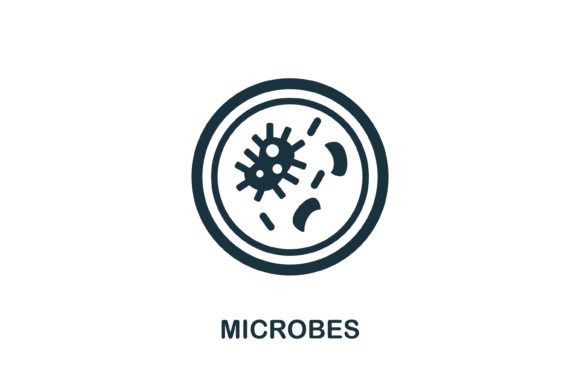
Designing with Precision: The Role of the Monochrome Microbes Icon in Modern Visual Communication
In the vast landscape of digital design, clarity often triumphs over complexity. When communicating concepts related to health, biology, or sanitation, designers frequently face a challenge: how to represent microscopic organisms without creating visual clutter or inducing unnecessary alarm. This is where the Microbes Icon becomes an indispensable asset. Specifically, the monochrome variation from hygiene collections offers a unique blend of scientific accuracy and aesthetic minimalism that serves a wide array of professional needs.
Unlike detailed biological illustrations that may distract from the core message, a simplified symbol acts as a cognitive shortcut. It allows users to instantly recognize the subject matter—bacteria, viruses, or general microbiology—without processing complex anatomical details. For web designers, infographic creators, and template developers, this balance is not just a stylistic choice; it is a functional necessity that improves user experience and information retention.
The Strategic Value of Monochrome Vector Graphics
Color is a powerful tool, but it can also be a limitation. In many design workflows, flexibility is paramount. A monochrome Microbes icon provides a neutral foundation that adapts to any brand identity or color scheme. Whether you are designing a sterile medical interface, a vibrant educational poster for children, or a corporate sustainability report, a single-color vector graphic integrates seamlessly without clashing with existing palettes.
This adaptability extends beyond mere aesthetics. From a technical standpoint, monochrome vectors are significantly lighter in file size compared to their multi-colored or rasterized counterparts. In an era where page load speeds directly impact SEO rankings and user bounce rates, utilizing lightweight SVG or EPS assets contributes to better overall site performance. Furthermore, because these icons are vector-based, they remain crisp and sharp at any resolution. You can scale a microbes symbol down to 16 pixels for a favicon or up to several meters for a trade show banner without losing definition or introducing pixelation.
File Formats and Workflow Integration
Understanding the deliverables is crucial for efficient project management. When acquiring a high-quality Microbes icon, professionals typically receive two distinct file types, each serving a specific purpose in the production pipeline:
- EPS File: This is the industry standard for editable vector graphics. An EPS (Encapsulated PostScript) file allows you to open the asset in software like Adobe Illustrator, CorelDRAW, or Affinity Designer. Within this format, every curve and node is accessible. You can adjust the stroke weight, modify the shape of the microbe’s flagella, or combine it with other elements to create a custom composite illustration. This editability ensures the icon never feels like a generic stock element but rather a tailored part of your unique design system.
- JPG File: While less flexible than a vector, the JPG serves as an immediate reference or a quick-insert option for non-design stakeholders. It is useful for drafting mockups, inserting into Word documents, or sharing via email when specialized software isn't available. However, for final production work, the vector source remains superior.
Applications Across Industries and Media
The utility of a simple hygiene collection illustration transcends niche scientific publishing. The Microbes icon has found a home in diverse sectors where visual shorthand is required to convey safety, cleanliness, or biological processes.
Web Design and User Interfaces
In healthcare portals and telemedicine apps, navigation must be intuitive. A well-crafted microbes symbol can serve as a clear indicator for sections related to infectious diseases, lab results, or sterilization protocols. Because the design is simple, it functions effectively even in small touch targets on mobile devices, ensuring accessibility and ease of use.
Infographics and Data Visualization
Data-heavy content requires visual anchors to break up text and guide the reader’s eye. When explaining the spread of pathogens or the efficacy of cleaning products, a consistent icon style maintains visual rhythm. Using a monochrome set ensures that the data remains the focal point, while the icons provide context without competing for attention. This is particularly important in public health communications where the goal is rapid comprehension.
Product Packaging and Labeling
Manufacturers of sanitizers, air purifiers, and food safety equipment rely on standardized symbols to communicate benefits quickly. A clean, recognizable logo vector helps consumers identify product functions at a glance on crowded retail shelves. The simplicity of the monochrome style also reduces printing costs and complexity, making it a practical choice for packaging design.
Balancing Scientific Accuracy with Stylistic Simplicity
One common concern when selecting a Microbes icon is the trade-off between realism and abstraction. For general audiences, hyper-realistic depictions of bacteria can sometimes trigger negative emotional responses or appear too clinical. Simple illustrations from hygiene collections mitigate this by adopting a friendlier, more geometric approach.
This stylization does not mean sacrificing meaning. Effective iconography retains key identifying features—such as the spherical shape of cocci, the rod-like structure of bacilli, or the tail fibers of bacteriophages—while stripping away unnecessary texture. This "essentialist" approach ensures the symbol is scientifically literate enough to be credible, yet abstract enough to be versatile. Designers should always consider their target audience when choosing between a more organic, hand-drawn style versus a rigid, geometric construction. The former suggests approachability and education, while the latter implies precision and technology.
Best Practices for Implementation
To maximize the effectiveness of these assets, consider the following practical recommendations during your design process:
- Maintain Consistent Stroke Weights: If you are using the Microbes icon alongside other symbols from a hygiene collection, ensure all line thicknesses match. Inconsistent strokes create visual dissonance that undermines professional polish. Since the EPS file is editable, you can easily adjust the global stroke width to align with your typography and layout grid.
- Test at Multiple Sizes: Always preview your vector asset at both its intended display size and significantly smaller dimensions. Details that look elegant at 500 pixels may disappear or merge into blobs at 24 pixels. Simplify nodes and increase negative space if legibility suffers at small scales.
- Leverage Negative Space: In monochrome design, the background is as important as the foreground. Use white space within the microbe shape to suggest internal structures or depth without adding additional colors. This technique keeps the file lightweight and the visual clean.
- Contextual Color Coding: While the base asset is monochrome, you can apply semantic color meanings in your final layout. Green might indicate beneficial probiotics, red could signal danger or infection, and blue often represents sterility or water treatment. Starting with a neutral vector gives you the freedom to apply this coding dynamically based on context.
Enhancing Accessibility and Inclusivity
Visual communication must be inclusive. When incorporating a Microbes icon into web templates or digital documents, always pair it with appropriate alternative text. Screen readers cannot interpret the visual metaphor of a stylized bacterium; they require descriptive labels such as "icon representing bacterial contamination" or "symbol for probiotic cultures." Additionally, ensure sufficient contrast ratios when placing monochrome icons against colored backgrounds. The simplicity of single-color graphics makes achieving WCAG compliance straightforward, provided designers remain mindful of luminance values.
Ultimately, the decision to use a simple, editable vector graphic is an investment in efficiency and clarity. By providing both EPS and JPG formats, these assets bridge the gap between creative flexibility and immediate utility. Whether you are building a comprehensive design system for a hospital network or creating a one-off educational flyer, the humble Microbes icon proves that in visual communication, less is often significantly more. It transforms complex biological concepts into accessible, scalable, and professionally polished visual elements that resonate across platforms and audiences.